
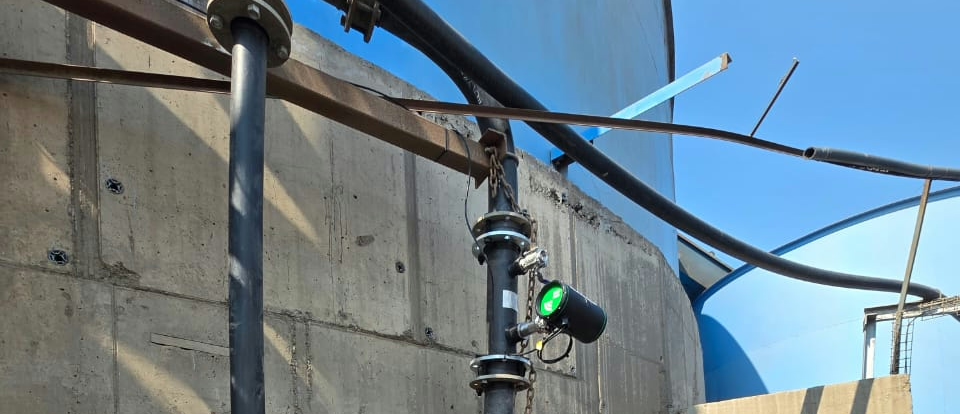
Thickener Underflow
SDM ECO compared to nuke in thickener underflow
Online Ultrasonic density and concentration measurement Putten · 52.26° N 5.61° E 14:32:07 CEST
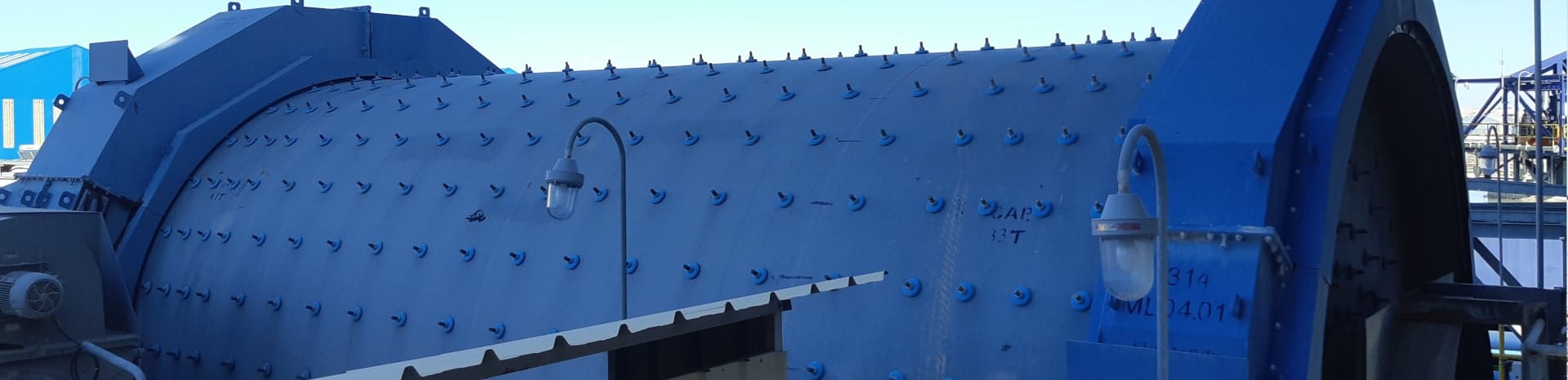
Rhosonics has interviewed Sandro Marino about the grinding circuit. He obtained a master’s degree in mineral processing at the University of Utah. In this episode you can find the questions and answers.
Photo · Rhosonics
Rhosonics has interviewed Sandro Marino about the grinding circuit. He obtained a master’s degree in mineral processing at the University of Utah. In this episode you can find the questions and answers.
A: First of all, to understand the importance of this parameter. 100% of the mines care about pulp density. The grinding circuit is the most expensive part of the mining process, because they consume a lot of energy, it is a high intensity energy environment. They also consume a lot of steel and grinding media. The consumption of grinding media is a significant part of the costs of the mineral processing plant. When operating with low density values, the efficiency of this circuit will be affected.
A: The ball mill will be performing the particle size reduction, that is the only task the mill has. The cyclone is controlling the efficiency of the mill. Generally, cyclones operate in very rough conditions. They receive a lot of material and are not able to look at individual particles. A large volume of particles is continuously coming into the cyclone. Therefore, the cyclone has to make a quick decision whether the particle has the right size to move forward into the overflow. If it is not good, the particle will move back to the mill. This part of the process requires a specific pulp density to be effective. The cyclones have a maximum efficiency of 50%. Any changes in the pulp density will affect the efficiency of the cyclone’s operation of separating particles based on their size.
A: That is not something you can control, like adjusting a ball mill. Most of the mines target a particle size and they control that. For example, you set 150 microns and the plant will run around 150 microns. The decision is based on how much the costs are to produce that amount of throughput and that particle size. Essentially, if you are not fine-tuning or adjusting the process variables, the costs will be higher. Adjusting the pulp density means that you are going to be producing whatever you have to produce at this minimum costs.
A: You can say that, some variables are mandatory in the mining site. It is important to get the maximum throughput and not cut on that, unless there are any circuit problems or adjustments needed. The second important variable is the particle size. However, those two variables are pretty much set as a certain target value. Mining sites are controlling the process to maintain these target values, such as the particle size.
A: Mining sites do have a lot of issues with water adjustments and circulating loads in the grinding circuit operations. When they start to operate a pump, this means the pulp density will be affected. If the water is constrained, sometimes they do not have water available, so those events will also affect the pulp density. They have to optimize the energy consumption by using all the parameters and information that they have available.
A: Yes absolutely. This is better than going to the next process stages immediately. For example, they have particles in sizes of two or three inches and they have to reduce these to 150 microns. If the grinding mill is set too tight, the energy consumption will be really high and it would have low efficiency.
A: Real-time data will be needed around the cyclone, since that is the most unstable part of the grinding circuit. The mill operates on the same pulp density from time to time, only a couple of adjustments during the day will be enough. The cyclone suffers the most variation in the pulp density. I would consider the cyclone feed as the most important measuring point. Then, if they also measure the underflow and overflow, combined with a flow meter, they will have the mass balance.
Want to have frequent updates on our products? Then please subscribe to our newsletter or follow us on LinkedIn.
Contributors
Every piece is written by someone at Rhosonics and reviewed by an engineer who works with the instrument. Names, so you can ask them.
Words
More from Insights
SDM ECO compared to nuke in thickener underflow
In 2026, Rhosonics Expands Global Reach by Showcasing Ultrasonic Process Solutions at Premier Industry Events.
Maintaining stable process conditions is critical for efficient flotation. With the right instrumentation and integrated automation stable process con...
Tell us the medium, pipe size and operating conditions. An engineer will tell you which instrument fits and what to expect from it, in writing, so it can go in the file.