Online Ultrasonic density and concentration measurement Putten · 52.26° N 5.61° E 14:32:07 CEST

00 · SDM ECO · Ultrasonic slurry density meter
Keep the reading.Lose the source.
SDM ECO measures slurry density inline with ultrasound. No radioactive source, so no licence, no controlled area and no source audits. The reading your control system gets is the same. The paperwork is not.
Density
1.483 SG
↗ +0.02 avg
Temperature
24.6 °C
Stable
Signal waveform
Live
Output 4–20 mA · Modbus · Example readout. Your numbers will be your numbers.
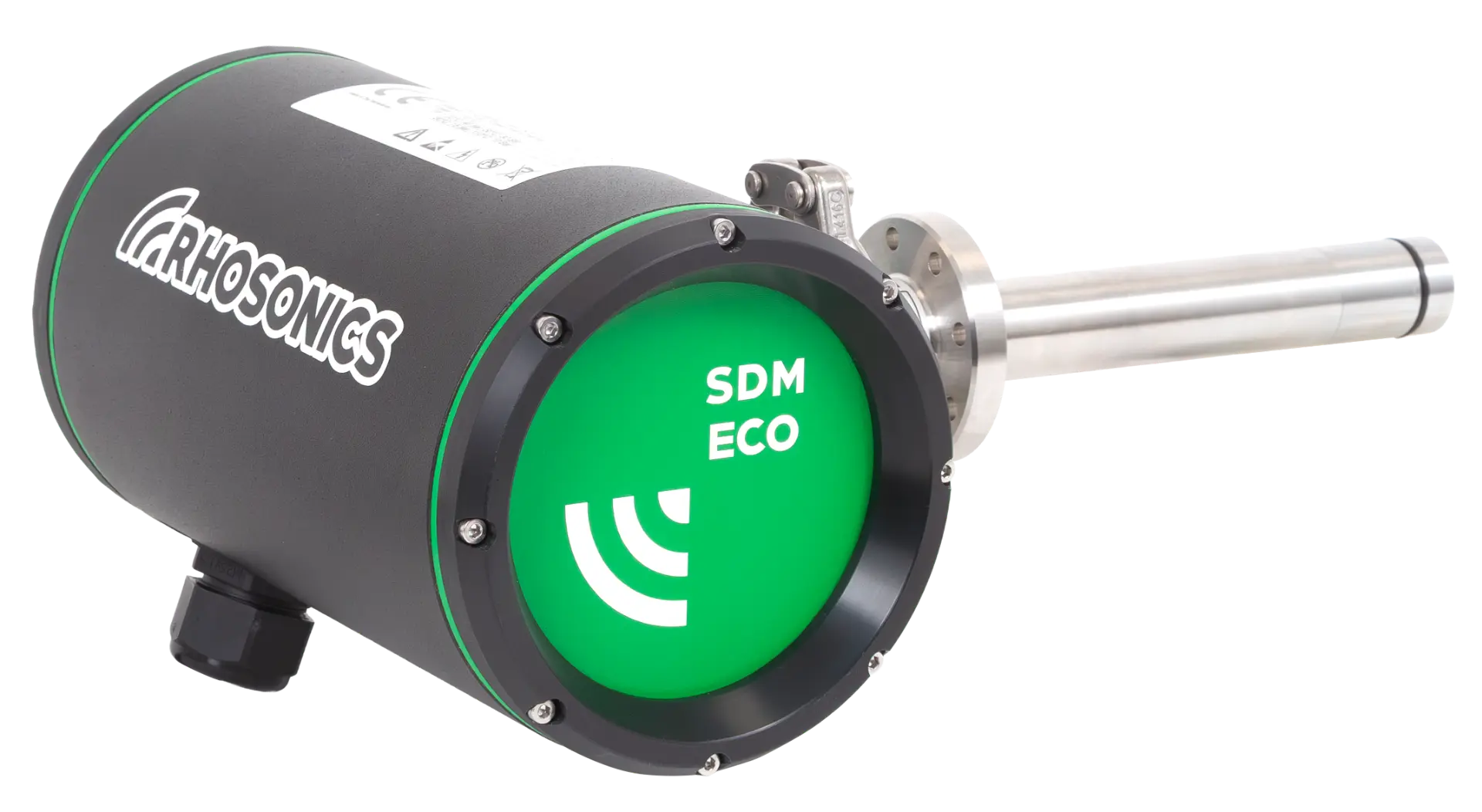
Photo · SDM ECO sensor
Ceramic and Duplex 2205 wetted parts · IP68 transmitter
Datasheet values
40 bar at 20 °C · 1–16 bar at 110 °C · HMI rated IP65
±0.5%
Accuracy
Acoustic impedance at the sensor tip, compensated for temperature.
SRC · SDM ECO datasheet
0–110°C
Process temperature
32 to 230 °F. A built-in sensor corrects the reading as the process heats or cools.
SRC · SDM ECO datasheet
40bar
Process pressure
At 20 °C. 1–16 bar at 110 °C, for lines that run hot and hard.
SRC · SDM ECO datasheet
IP68
Transmitter
NEMA 6P, powered over Ethernet, calibration held in a sealed housing.
SRC · SDM ECO datasheet
Things SDM ECO does not come with. Start with your question.
A nuclear gauge arrives with a radioactive source, and the source arrives with an entourage. Ultrasound travels alone. Three people usually sign off a density meter, and they ask different things.
Instrumentation and control engineers
Will it measure as reliably as our nuclear gauge?
See it tested side by side with a nucleonic gauge, then validate it on one of your own lines before you commit.
See the field comparison
Plant and maintenance managers
What does it take off our plant?
The licence, the controlled area, the source audits and the disposal bill. See what changes at each stage of the gauge's life.
Compare the lifecycle
EPC and project engineers
Should we specify it on a new build?
Specify non-nuclear at design stage and there is no radiation licence on the path to commissioning.
Specifying for a new plant
0
Radiation licences
There is no source to register, so there is no regulator to satisfy.
0
Controlled areas
Work near the line follows your normal site rules. No dosimeters, no permits.
0
Source changes
Nothing decays, so nothing needs a licensed specialist to swap it.
0
Disposal bills
Nothing radioactive to decommission or return at end of life.
Also 0 radiation safety officer hours, but we ran out of columns.
Nuclear density gauge
A nuclear gauge costs more than its purchase price.
After the purchase come licences, a controlled area, specialist service visits and, eventually, disposal. None of it improves the reading. It exists because there is a radioactive source on the pipe.
- Licensing
- Regulator approval, source records and inspections for every source on site.
- Near the pipe
- A controlled area, with training, dosimeters and permits for work near the line.
- Maintenance
- Source changes and licensed service visits, scheduled around the specialist.
- End of life
- Decommissioning and returning the source, often years after the purchase.
SDM ECO
The same stages. Considerably less admin.
SDM ECO goes on the pipe like any other instrument. What follows is what follows any other instrument: commissioning, calibration, the occasional look at the diagnostics.
- Licensing
- No radiation licence. There is no source to register.
- Near the pipe
- No controlled area. Work near the line follows your normal site rules.
- Maintenance
- No source changes and no licensed service visits.
- End of life
- Nothing radioactive to decommission or return.
02 · The system
Three parts. Only one of them gets wet.
SDM ECO sends an ultrasonic pulse into the slurry, measures the echo and converts it into the density value your control system already uses. It measures process temperature at the same point.
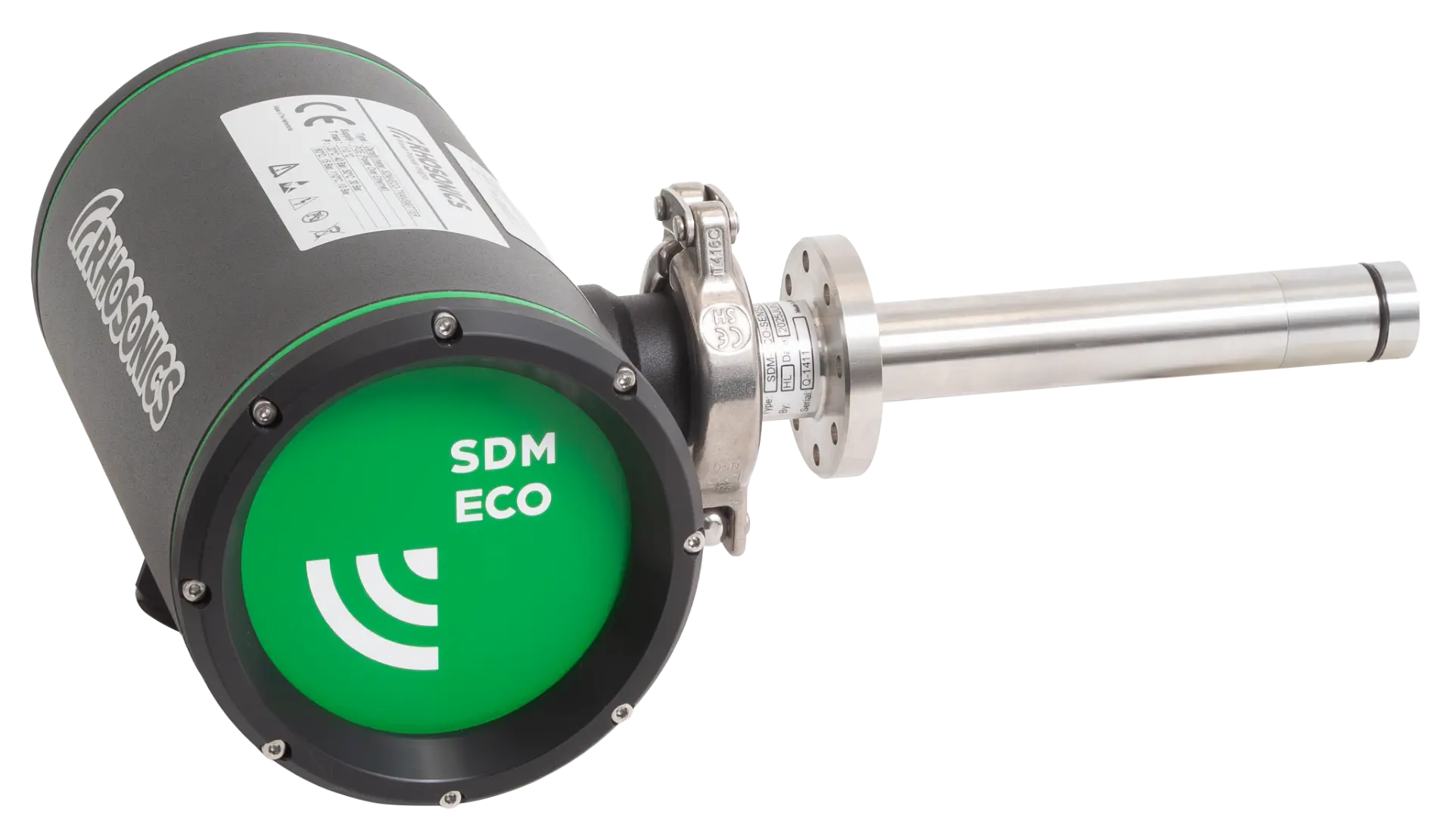
On the pipe
Sensor and transmitter
The ultrasonic sensor measures in the slurry line, with wetted parts in ceramics and Duplex 2205. The transmitter holds the calibration in a sealed IP68 housing, powered over Ethernet.
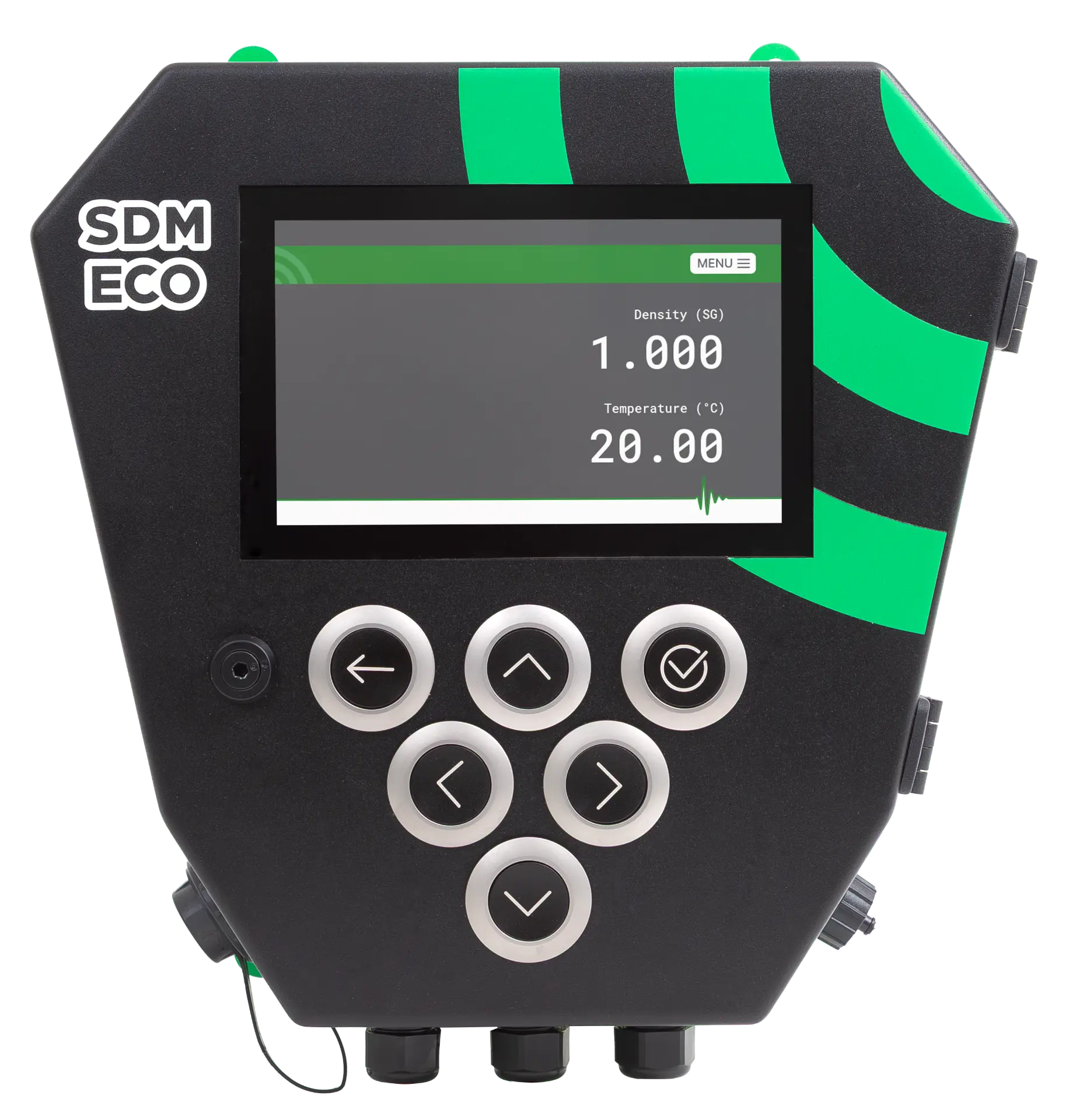
Where your operator stands
HMI
A 7-inch touchscreen with six push buttons for live readings, trends and logs. Operate it locally, from a laptop or through a connected server.
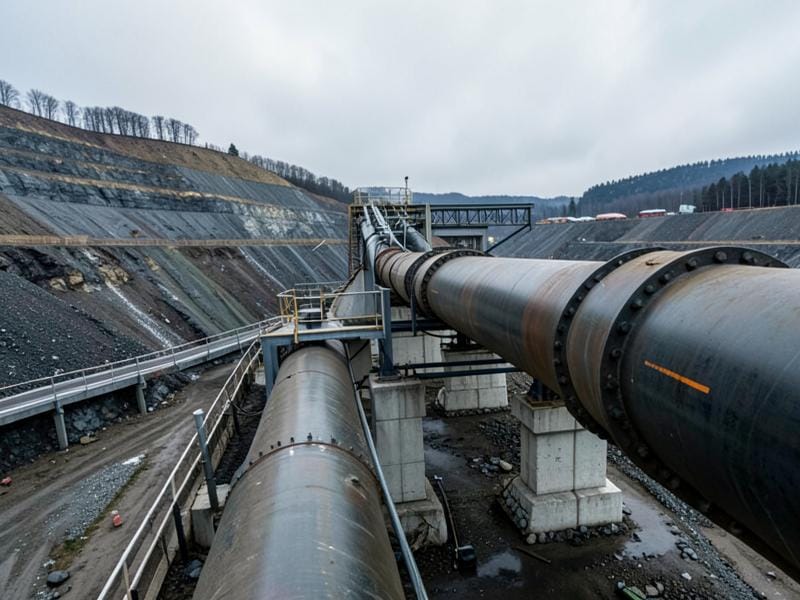
In the control room
Your control system
Two 4–20 mA outputs as standard, plus Modbus over RS-485 or Ethernet. With the mass flow option it also reports mass flow and dry solids throughput.
- 4–20 mA
- Modbus RTU
- Modbus TCP/IP
- RS-485
- Ethernet
- HART
- Profibus DP
- Profinet
Grey protocols on request
Replacing an SDM-4? SDM ECO improves on accuracy, response time, operating temperature range and sensor design. It also fits the same kind of pipe, so the conversation is shorter than you might expect.
Discuss an upgrade03 · How it measures
Sound goes in. Density comes out.
No radioactive source and no moving parts. SDM ECO measures acoustic impedance at the sensor tip and repeats four steps continuously, so the reading follows the process rather than the sampling interval.
Sensor tip · Cross-section
Pulse Echo
Pulse · Echo · Temperature
Not to scale
01
Transmit
The sensor sends a short ultrasonic pulse into the slurry.
02
Reflect
Part of the pulse reflects at the boundary between the sensor tip and the slurry.
03
Measure
The strength of the echo gives the acoustic impedance of the slurry, and from that its density.
04
Compensate
A built-in temperature sensor corrects the reading as the process heats up or cools down.
04 · Field results
Tested beside nuclear gauges, on working thickeners.
Two SDM ECO installations on thickener underflow, written up as case studies you can hand to your control-system team and procurement without adding a covering note.
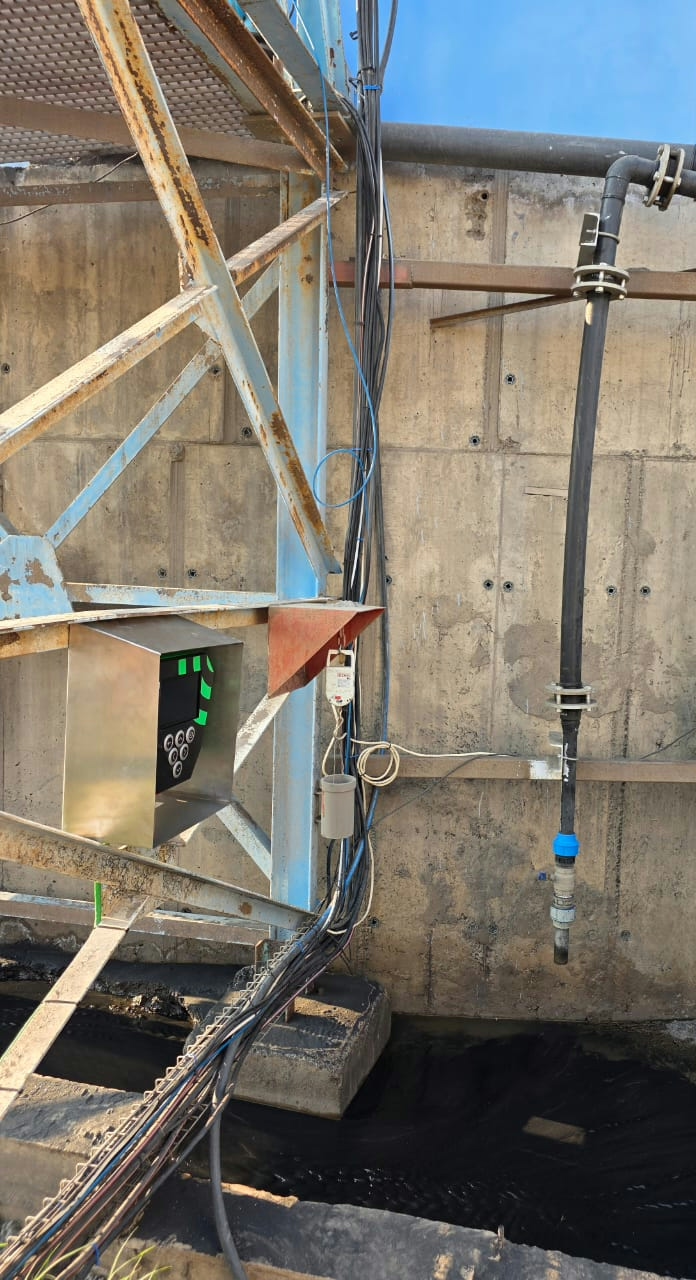
04.1 · Side by side with a nucleonic gauge
Chrome and PGM processing, Bushveld Complex
- Site
- Bushveld Complex, South Africa
- Application
- Thickener underflow
- Result
- Accuracy comparable to the installed nucleonic meter, faster response to density changes
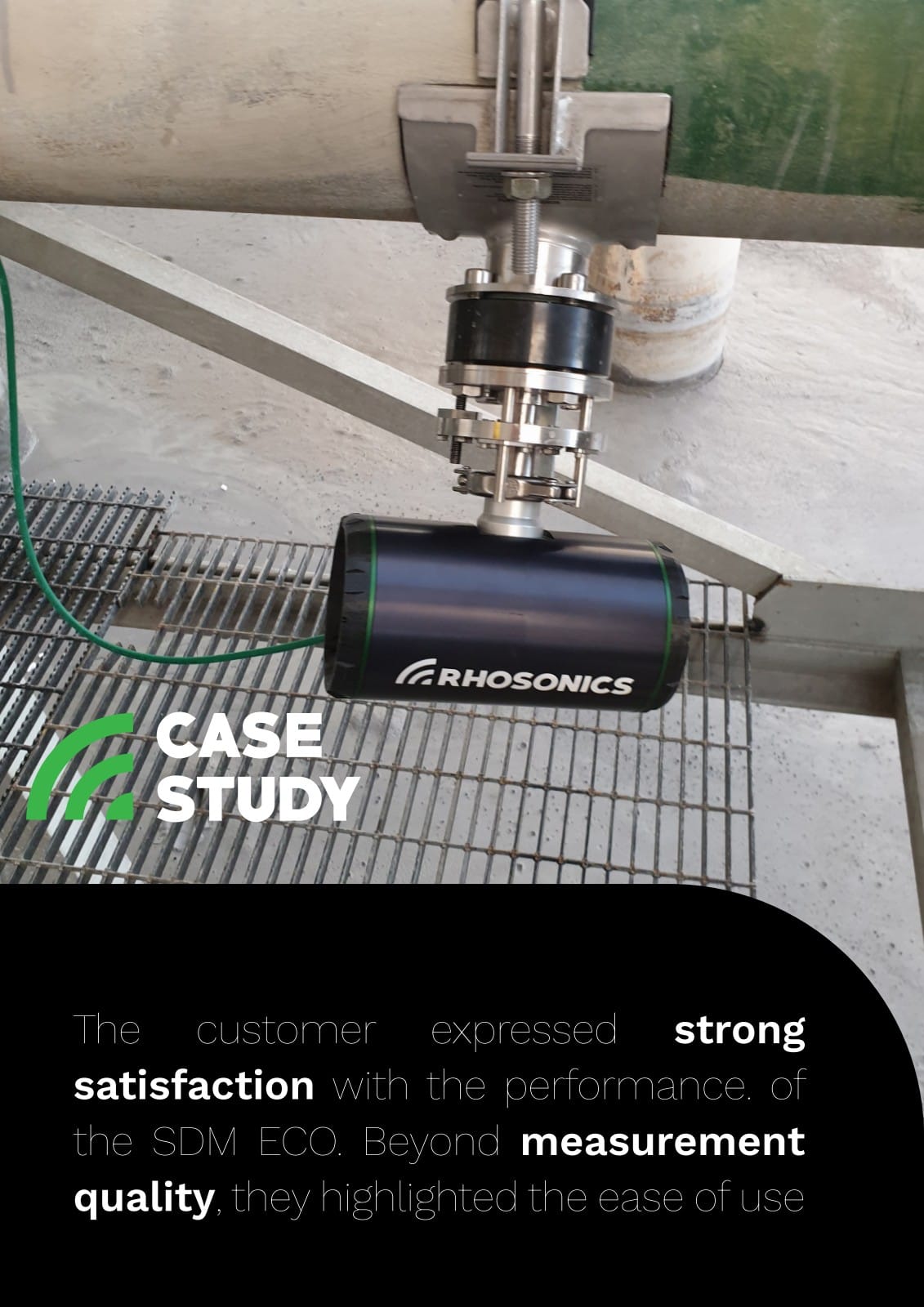
04.2 · Tailings thickener underflow
Grupo México, Charcas
- Site
- Charcas, Mexico
- Application
- Tailings thickener underflow
- Result
- Moved between water and slurry without recalibration, unaffected by changes in pump flow
Results from these installations. Performance depends on the application and configuration. See also the Weir Minerals comparison test of three suppliers' meters.
Validate it on one line first.
Install SDM ECO next to the gauge you already have, compare the readings on your own slurry, then decide on the rest of the plant. The incumbent will not mind. It is a box.
“The instrument was easy to install and requires little maintenance according to the comments of the electrical crew.”
Eric Mercier · Production Metallurgist · Agnico Eagle Meadowbank
“The SDM is much more efficient than other older generations, in terms of reliability, measurement fidelity and precision.”
Abdelhadi Guennani · Maintenance and Procurement Manager · OCP Group
“The operation and maintenance team at the Beni Amir wash plant are satisfied with this technology.”
Mohammed el Moudden · Chief Instrumentation · OCP Khouribga
These quotes describe earlier Rhosonics SDM installations, not SDM ECO.
New builds
For EPC and project engineers
Specifying a new plant? Leave the source off the flowsheet.
Once a flowsheet is drawn with a nuclear gauge, its licence follows it all the way to commissioning. Specify SDM ECO at scoping instead, and there is no licence to obtain and no source to manage for the life of the plant.
No licence on the critical path
Without a radioactive source there is no radiation permit to obtain before the plant can start.
Application data before you specify
Share the slurry, pipe sizes and operating conditions at pre-feasibility. We will tell you where SDM ECO fits and where it does not.
One instrument across the flowsheet
Grinding, flotation, thickening, tailings and transport lines can all take the same density meter.
05 · Applications
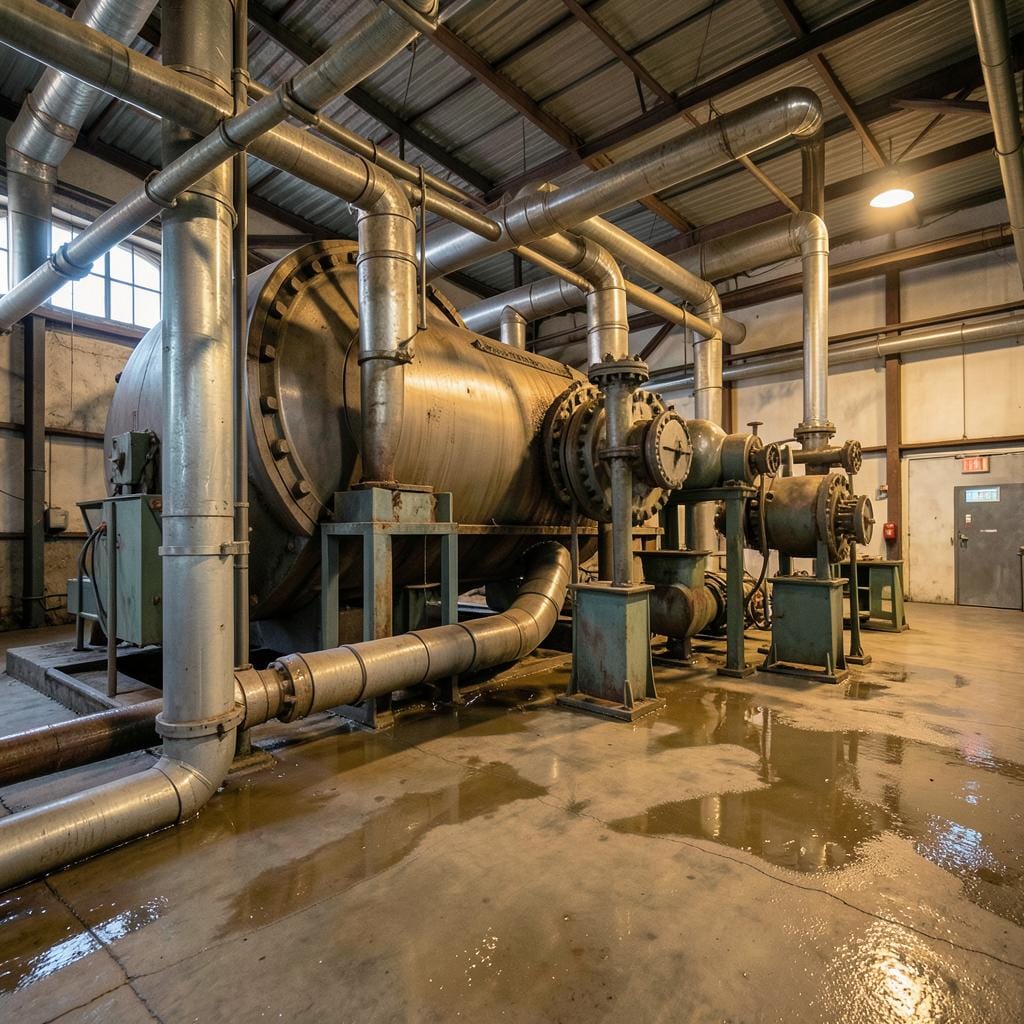
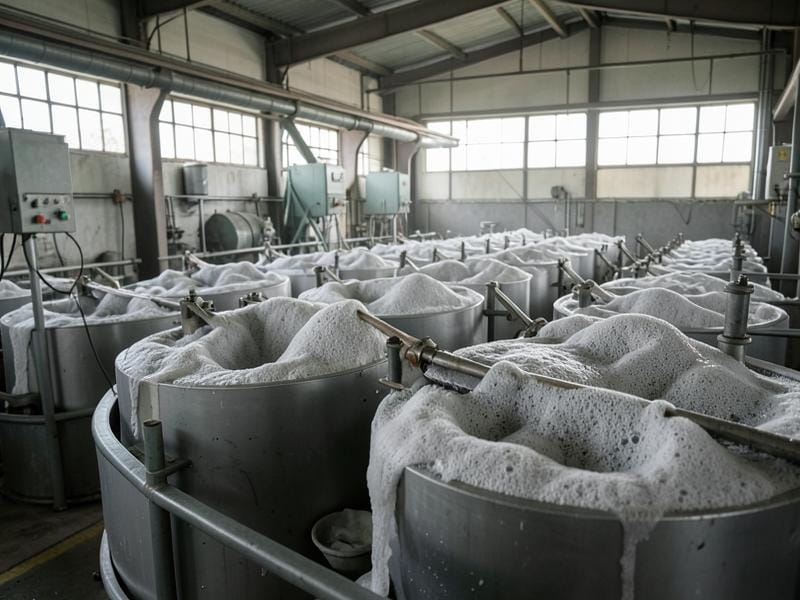
Where it measures in a concentrator.
Copper, gold, platinum, iron ore and phosphate plants use it wherever slurry density is a control variable. No sampling interval, no waiting for the lab, no arguing with the lab.
05.1
Grinding and classification
Measure cyclone feed and mill discharge density to keep classification at its setpoint.
05.2
Flotation
Hold pulp density steady through each flotation stage. Reagent dosing depends on it.
05.3
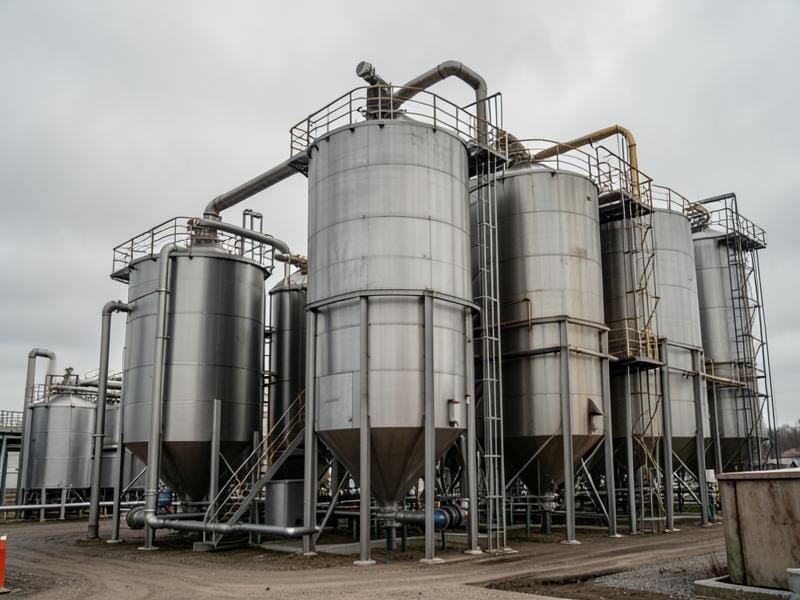
Thickener underflow
See underflow density continuously, not at sample intervals, for steadier feed downstream and better water recovery.
05.4
Tailings and backfill
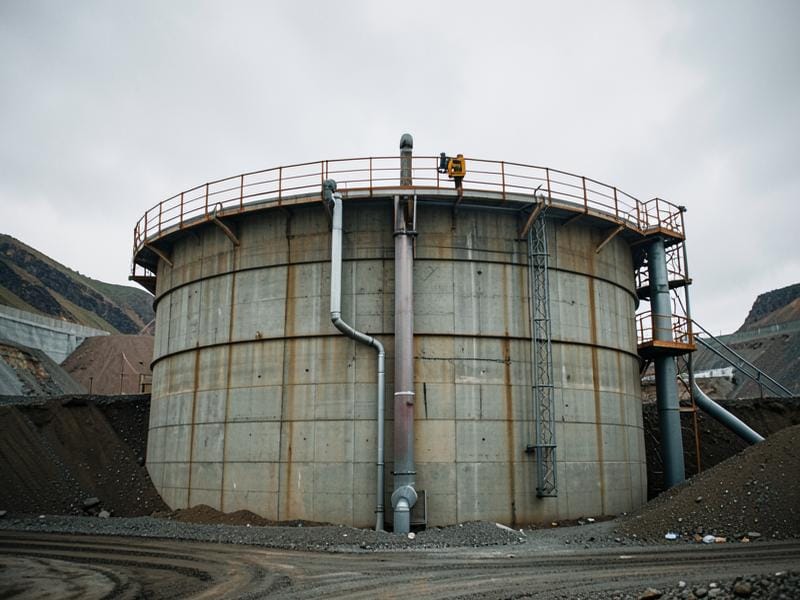
Measure tailings and backfill density for safe deposition and water recovery, including on active tailings storage facilities where a nuclear source is not an option.
05.5
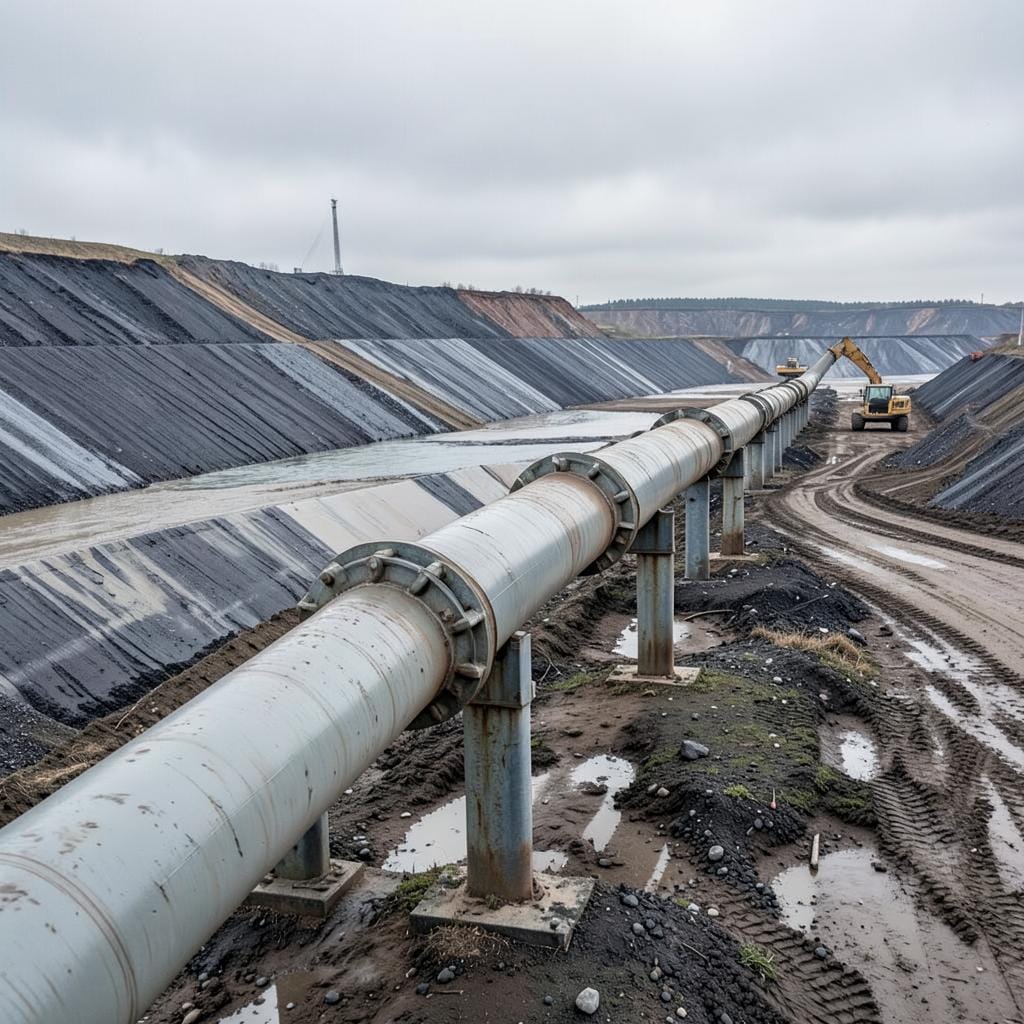
Pipeline transport
Stay inside design limits so the line does not settle out and the pumps do not wear early.
05.6
Leaching (CIL and CIP)
Control leach feed density for steady reagent use and predictable extraction.
06 · Installation
Four ways to fit it to your line.
Two options for new pipework and two for pipe already in service. Send us your pipe dimensions and slurry details, including for large or partially filled pipes, and we will help you choose.
For new pipework · 06.1
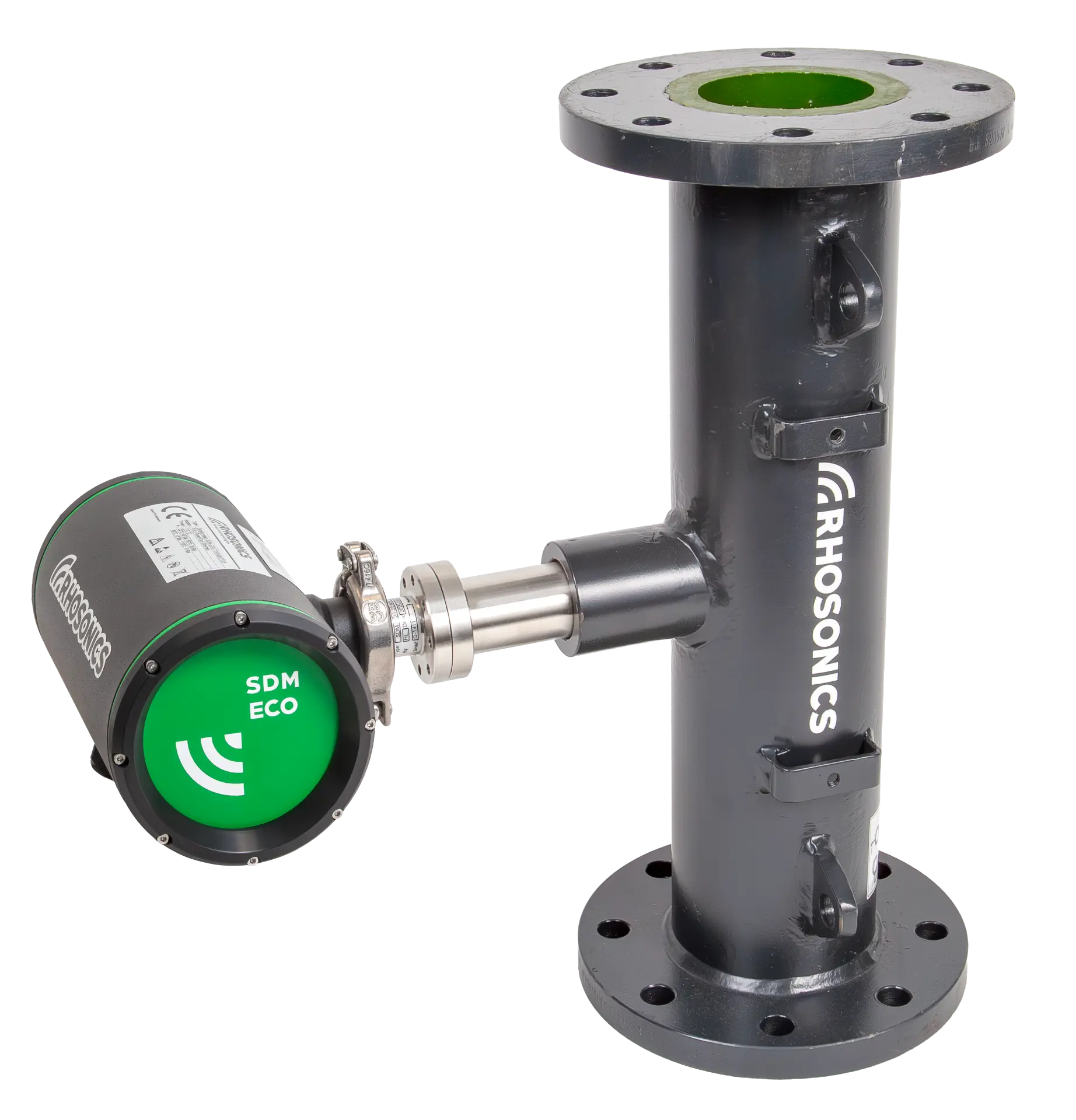
Spool-piece
A pipe section aligned at the factory, so it bolts in ready to measure. The choice for abrasive duty.
- Pipe diameter
- 1–20″
- Materials
- HDPE · CS · 316 · 904
For new pipework · 06.2
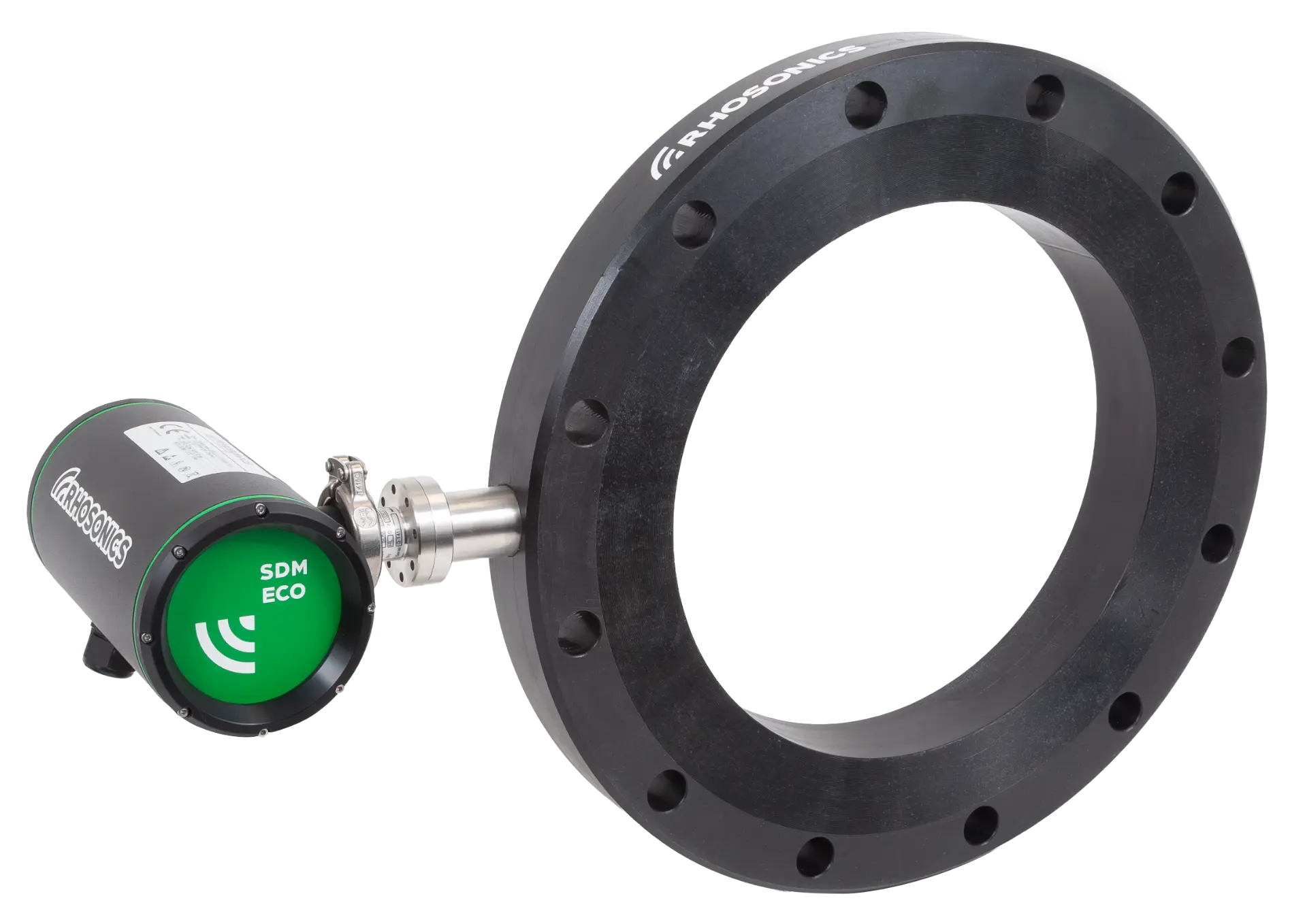
Wafer cell
A 60 mm UHPE ring that fits between two pipe flanges. Compact, for lower-abrasion duty.
- Pipe diameter
- 4–60″
- Material
- UHPE
Pipe in service · 06.3 · Drill · Clamp · Fit
Clamp-in saddle
Drill a hole, clamp the saddle on and fit the sensor. For a line that is already in the ground.
- Pipe OD
- > 4″
- Material
- Stainless steel
Pipe in service · 06.4 · Weld · Fit
Weld-o-let
A permanent adapter welded into steel pipe, on a new line or one that has run for years.
- Pipe OD
- > 3″
- Wall
- 5–22 mm
Not sure which arrangement suits your line? Send us the pipe dimensions, slurry details and operating conditions. Commissioning support is available for every option.
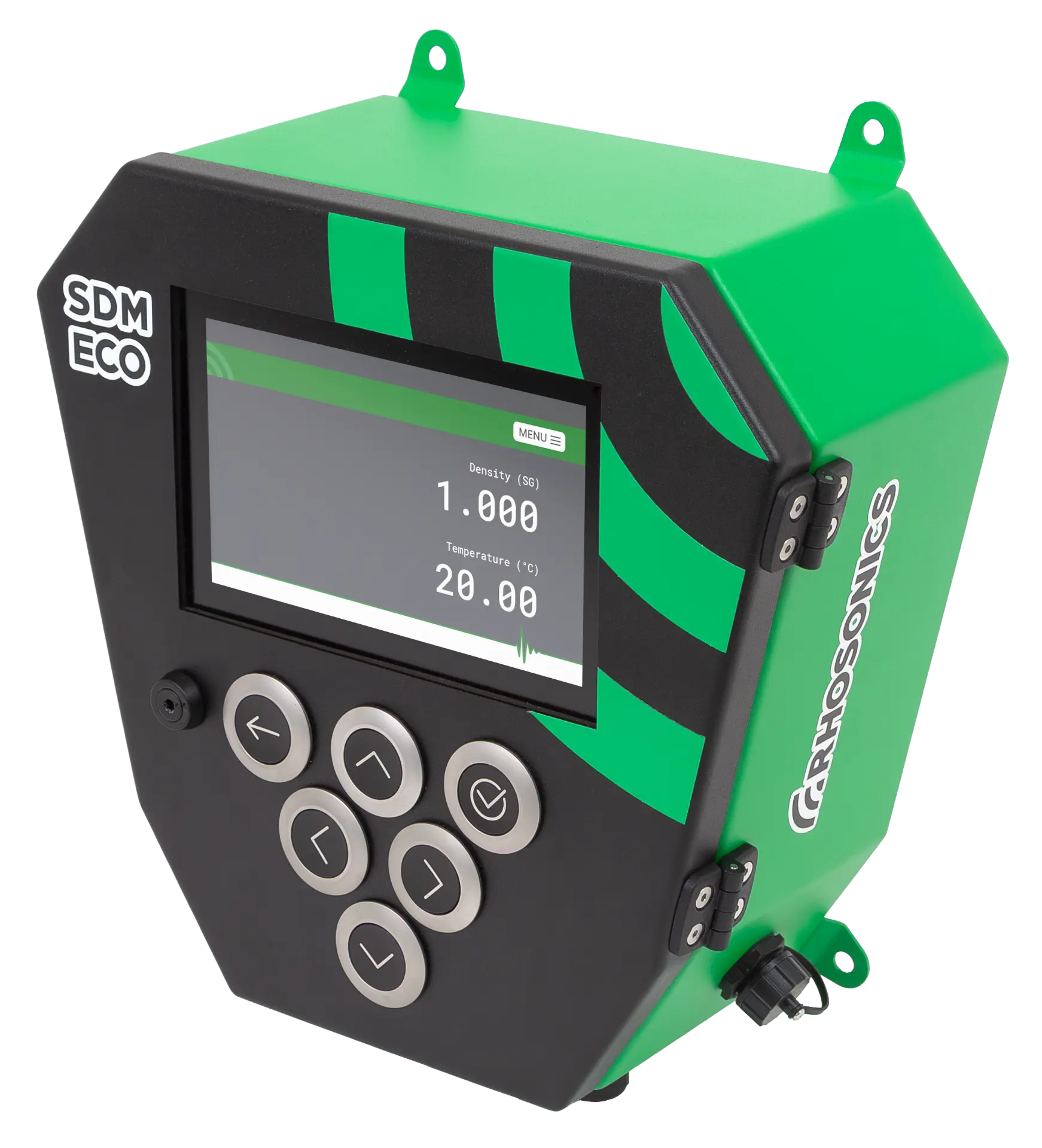
SDM ECO · HMI · 7″ · IP65 · 316 stainless
Read it in a browser. Connect it to your control room.
Operate SDM ECO from the 7-inch touchscreen, a laptop or optional Wi-Fi, subject to your site network. Your team or ours can read diagnostics and the service log remotely.
Operation
No software to install on a laptop. The interface runs in English, French, Spanish and Portuguese. Calibrate by offset and span, linear or multi-point.
Control room
Outputs configured to the protocols you already run. The main screen shows up to four values at once.
Access
Every user gets a personal PIN and one of four roles: Guest, Operator, Expert or Admin.
Diagnostics
Continuous logging to 8 GB, exported by USB stick. Echo traces show signal and hardware health, and the log records what changed, when and by whom.
07 · Specifications
Values from the current datasheet. Nothing rounded in our favour.
- Measurement
- Method
- Acoustic impedance and temperature
- Accuracy
- ±0.5 %
- Density
- SG, SG×1000, kg/m³, g/l, lb/ft³, wt%
- Temperature
- °C, °F
- Volume flow
- m³/s, ft³/s, l/min, m³/h
- Mass flow
- kg/s, kg/h, lb/s, lb/h
- Throughput
- t/h, and dry solids in t/h
- Sensor
- Process pressure
- 1–16 bar at 110 °C, 40 bar at 20 °C
- Process temperature
- 0 to 110 °C (32 to 230 °F)
- Rod material
- SS316L
- Wetted parts
- Ceramics, Duplex 2205
- Dimensions
- Ø 27 × 146 mm
- Weight
- Approx. 1 kg
- Transmitter
- Power
- Power over Ethernet (PoE)
- Protection
- IP68, NEMA 6P
- Ambient temperature
- −5 to 50 °C (23 to 122 °F)
- Humidity
- < 95 % at 40 °C, non-condensing
- Cable glands
- 1 × M20×1.5, 1 × M25×1.5
- Housing
- Coated aluminium
- Dimensions
- 212 × 170 × 218 mm
- Weight
- Approx. 1.5 kg
- HMI
- Power supply
- 18–32 VDC, 17 W (20 W peak)
- Analog output
- 2 × 4–20 mA (3 × with mass flow option)
- Digital output
- Modbus RS485, Ethernet
- Data logging
- Continuous, 8 GB (expandable), USB export
- Display
- 7″ touchscreen, 6 push buttons
- Protection
- IP65, NEMA 4
- Housing
- Stainless steel 316
- Dimensions
- 300 × 300 × 150 mm
08 · Downloads
Take it to procurement.
Everything you need to put SDM ECO in front of your team, your integrator or the person who signs the purchase order.
PDF · Brochure
SDM ECO brochure
The system, its benefits and installation options.
Web · Documentation
Manuals and documentation
Product manuals, or request drawings and certificates.
Further reading
Discuss your application.
Tell us the slurry, pipe size and operating conditions. We will tell you whether SDM ECO fits, how to install it and which configuration you need. If it does not fit, we will say so, which saves everyone a meeting.
- sales@rhosonics.com
- Phone
- +31 341 370 073
- Made in
- Putten, the Netherlands