
Thickener Underflow
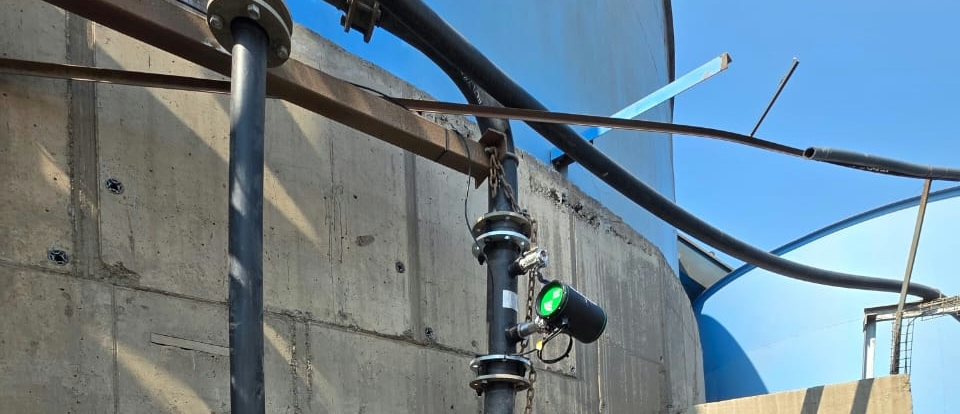
SDM ECO compared to nuke in thickener underflow
Online Ultrasonic density and concentration measurement Putten · 52.26° N 5.61° E 14:32:07 CEST
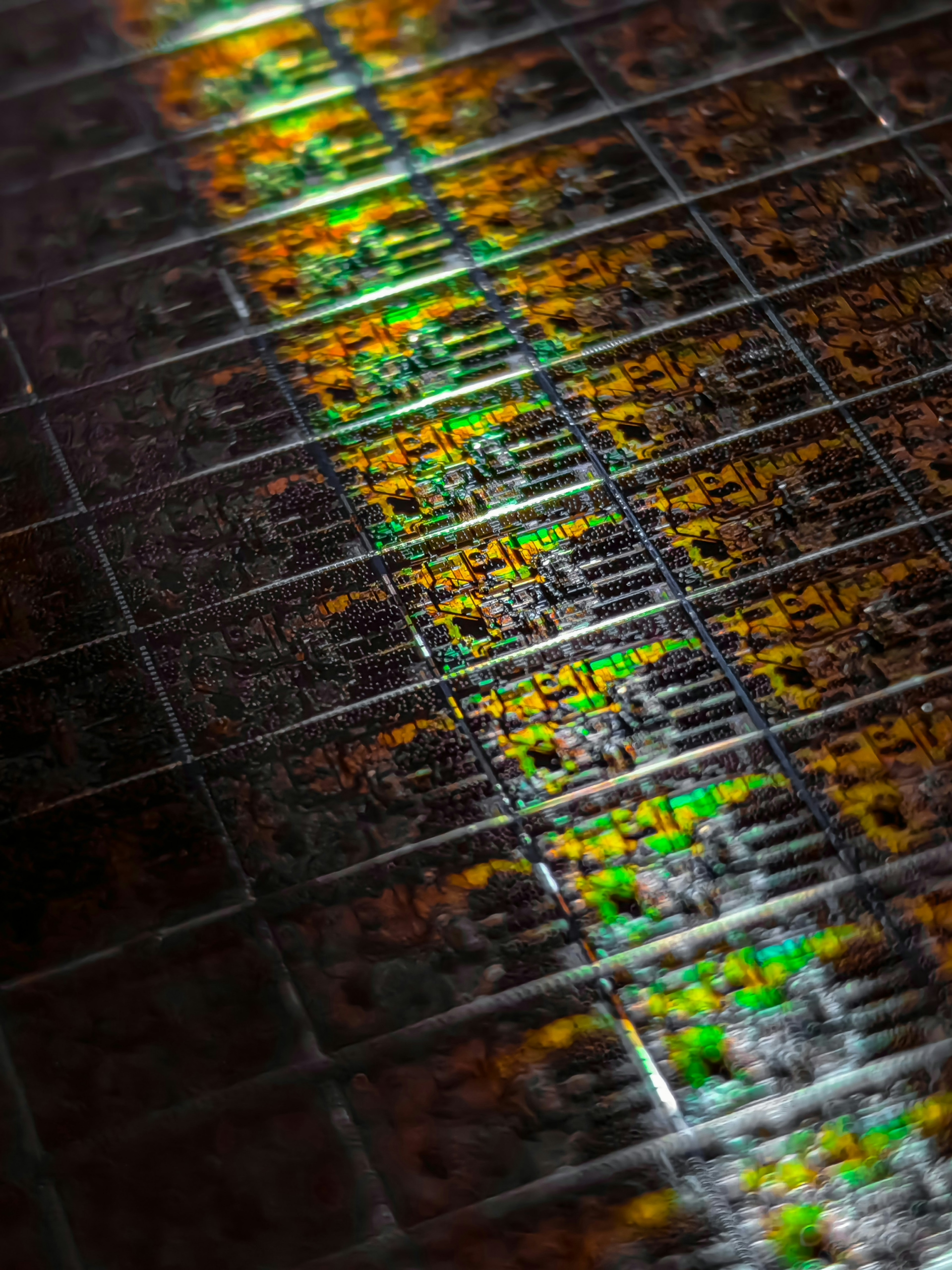
Chemical Mechanical Polishing (CMP) is a critical process that ensures the production of high-quality silicon wafers, the building blocks of modern electronics. Controlling the CMP slurry composition during this process is essential to achieve the desired wafer quality.
Photo · Rhosonics
In the fast-paced world of semiconductor manufacturing, accuracy and efficiency are paramount. Chemical Mechanical Polishing (CMP) is a critical process that ensures the production of high-quality silicon wafers, the building blocks of modern electronics. Controlling the CMP slurry composition during this process is essential to achieve the desired wafer quality.
The Challenges of CMP Slurry Monitoring
CMP slurry is a complex mixture of water, abrasive particles, and chemicals. Its precise composition can significantly impact the polishing process and, ultimately, the final wafer quality. Therefore, real-time monitoring of the slurry composition is crucial for maintaining consistency and optimizing the CMP process.
Traditional methods for monitoring CMP slurry often involve offline sampling and laboratory analysis, which are not only time-consuming and labor-intensive but also fail to accurately reflect the real-time conditions of the slurry during the polishing process. As a result, adjustments based on these analyses may be too late, leading to wasted resources and less-than-optimal results.
Introducing Rhosonics Technology
Rhosonics offers a breakthrough solution for real-time, inline monitoring of CMP slurries. Our innovative technology utilizes a unique combination of ultrasonic and conductivity measurements to deliver accurate and continuous data on slurry composition. This real-time feedback empowers semiconductor manufacturers to maintain control over the CMP process, resulting in improved wafer quality, reduced waste, and enhanced efficiency.
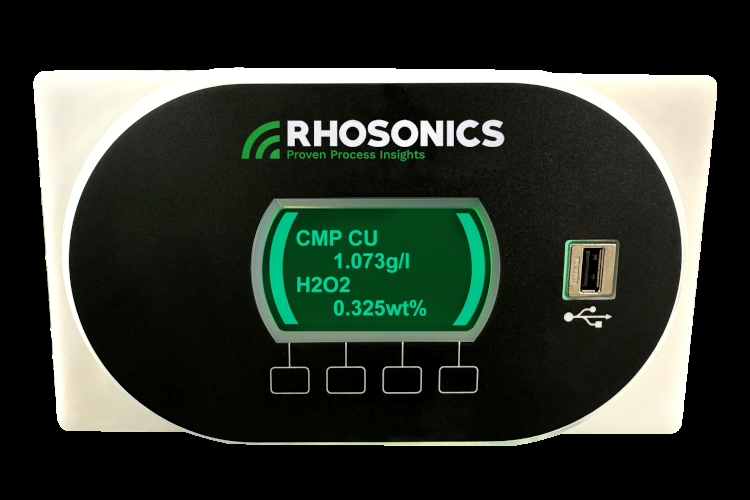
Our Chemical Concentration Meter (CCM) is designed to operate inline, allowing the slurry to flow through the system before reaching the polishing machines. This setup provides a significant advantage over traditional sampling methods, as it enables continuous monitoring and adjustment. With the CCM, manufacturers gain insights into slurry density, concentration, and suspended solids in real time—capabilities previously considered unattainable.
Understanding Ultrasonic Measurement
The ultrasonic system in the Rhosonics CCM operates using a reflection setup with two sensors positioned opposite each other. A piezo element operating at 2 MHz generates ultrasound waves. When these waves encounter the slurry, some of the ultrasound is reflected at the phase interface, while some energy is absorbed by the slurry. This reflection behavior serves as a “fingerprint” of the slurry, as each liquid has its unique sound speed. The difference in signal energy between the two materials is quantified as the reflection coefficient (R), from which the acoustic impedance of the liquid is calculated using Sir Rayleigh’s formula.
Sound speed, calculated from the travel time of the ultrasound signal, is another essential parameter. It represents the time taken for the signal to traverse from the emitter to the receiver through the medium. This value is indicative of the slurry’s unique composition, allowing us to assess the concentration and type of particles present. By determining the acoustic impedance and the sound speed, we can accurately calculate the bulk density of the slurry, providing a real-time profile of its composition.
This ultrasonic measurement approach is a game-changer for CMP monitoring, as it provides insights that go beyond mere concentration levels. It also enables Rhosonics to measure properties that competitors’ tools cannot—making the CCM the only device in the market capable of such comprehensive real-time analysis.
Conductivity Measurement for Enhanced Accuracy
Alongside ultrasonic measurement, the CCM’s conductivity system features both a drive coil and a sense coil. The drive coil, energized with alternating current (AC), generates a magnetic field that induces currents in the conductive fluid. These currents produce a secondary magnetic field, which is detected by the sense coil. The strength of the induced signal correlates with the fluid’s conductivity and is converted into a conductivity value.
Conductivity data complements ultrasonic measurements by providing information about the chemical composition of the slurry, including the concentration of specific chemicals such as hydrogen peroxide (H₂O₂). Unlike traditional methods, which often focus on one parameter at a time, Rhosonics’ CCM captures multiple aspects of the slurry composition simultaneously, allowing for a far more comprehensive understanding of the CMP process.
Unique Benefits of Rhosonics Technology
The Rhosonics CCM offers several benefits that make it an invaluable asset to semiconductor manufacturers:
Breaking New Ground in CMP Monitoring
The Rhosonics CCM is more than just a monitoring tool; it represents a paradigm shift in CMP slurry management. Traditional methods fall short because they lack the ability to monitor in real time and cannot capture the full complexity of the slurry composition. During a recent presentation at the ICPT Conference in Wiesbaden, some attendees questioned what makes the CCM superior to existing methods. The answer lies in its unique capability to measure multiple parameters with high levels of accuracy, in real-time, and across diverse compositions.
Our approach to CMP slurry monitoring is unprecedented—many in the industry were unaware that such comprehensive, real-time measurement was even possible. By treating sound speed as a “fingerprint” unique to each slurry mixture, we enable a new level of accuracy in process control that has far-reaching implications for wafer quality and process efficiency. This pioneering technology provides semiconductor manufacturers with an edge, helping them stay competitive in a highly demanding market.
To learn more about how Rhosonics technology can benefit your CMP process, reach out to our team today. We’re here to help you take your semiconductor manufacturing operations to the next level.
Contributors
Every piece is written by someone at Rhosonics and reviewed by an engineer who works with the instrument. Names, so you can ask them.
Words
More from Insights
SDM ECO compared to nuke in thickener underflow
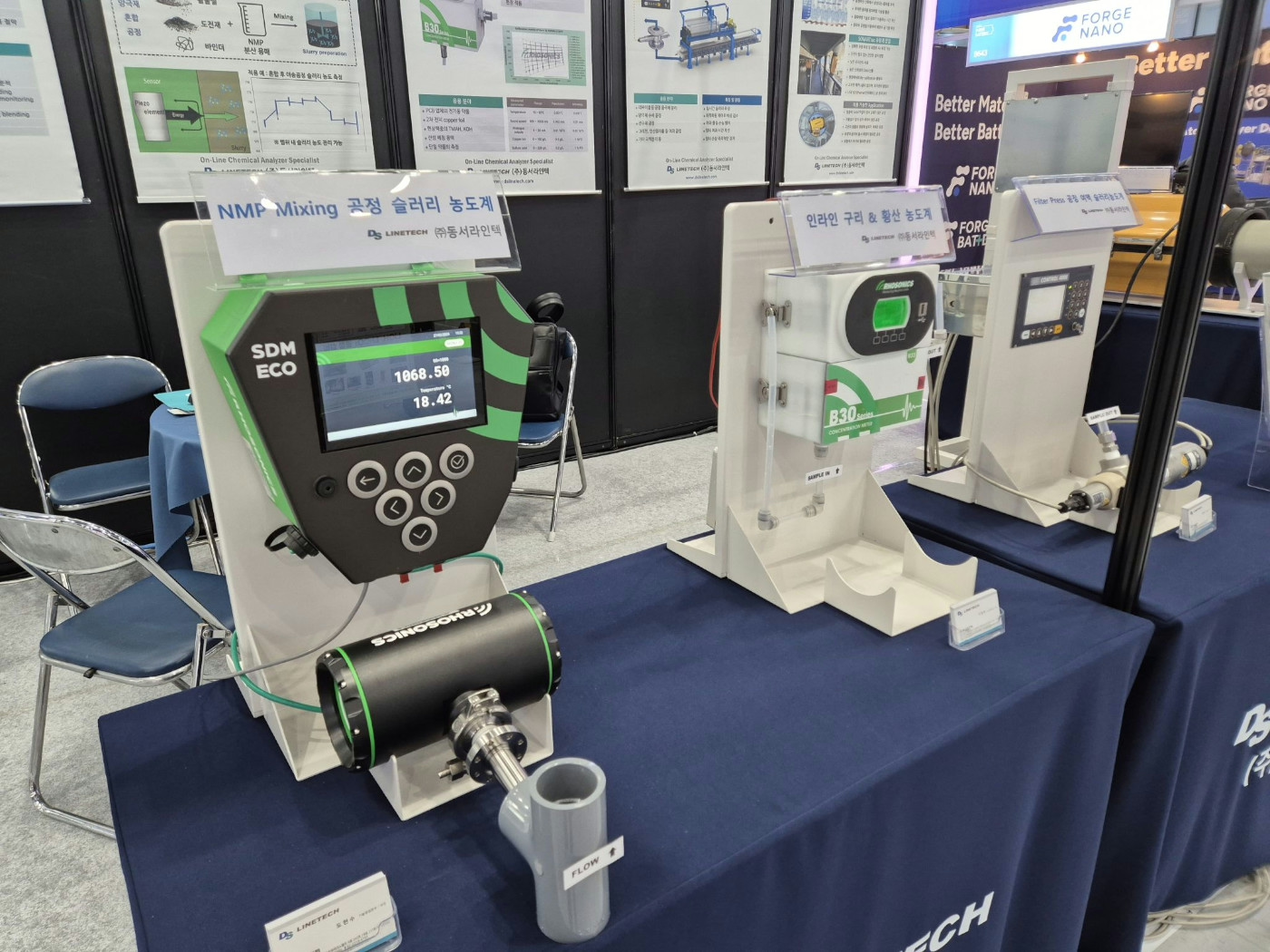
In 2026, Rhosonics Expands Global Reach by Showcasing Ultrasonic Process Solutions at Premier Industry Events.

Maintaining stable process conditions is critical for efficient flotation. With the right instrumentation and integrated automation stable process con...
Tell us the medium, pipe size and operating conditions. An engineer will tell you which instrument fits and what to expect from it, in writing, so it can go in the file.